

Estate and Planned Gifts

As Gutenberg College starts into its fourth decade, we are excited and grateful to be looking at the long-term sustainability of the college through estate and planned gifts. For exploring how to participate, this page offers:
▶ An overview of options for designating an estate gift
▶ A statement from board member John R. Hemmerich, attorney at law
▶ A statement from board member Allan Bruner, educator
▶ Donor Testimonals
“We do not inherit the Earth from our ancestors. We borrow it from our children.” —Wendell Berry
Overview of Giving Options
A legacy gift is a way to significantly impact Gutenberg and its students. By including Gutenberg in your estate plan, you play an important role in sustaining the college and its students for future generations. There are a number of ways you can be a part of the college’s future as you consider your estate and planned giving, including:
- Bequests: A bequest is a gift made through your will or trust that provides flexibility and allows you to maintain control over your assets during your life.
- Beneficiary Designations: You can designate Gutenberg as a beneficiary of a retirement, investment, or bank account; stocks; or your life insurance policy.
- Real Estate: You can donate appreciated real estate, such as a home, vacation property, undeveloped land, farmland, ranch, or commercial property.
If you would like us to reach out for a conversation about planned giving to Gutenberg College, resources to help you with estate planning, or to let us know if we’re already included your estate plan, please contact the Gutenberg office at office@gutenberg.edu.
See also “National Christian Foundation Charity Fund” under Ways to Support for more information about donating non-cash assets to Gutenberg College.
Board Member
John R. Hemmerich, Attorney at Law

As a lawyer for family estate planning, families come for my service to make informed, purposeful decisions about how their estate lives on as a legacy.
A major consideration for decision making is designating portions of their estate to further organizations they believe in and support. I also help navigate a path to steward their legacy resources in light of government laws and taxes on retirement funds and the estate.
While I’m not able to give specific advice for your situation, here are some helpful considerations that can get missed:
- Retirement Funds (IRAs, RMDs, and QCD’s): Upon reaching retirement age, folks with IRAs will encounter Required Minimum Distribution (RMDs). Since the funds are taxable income, an option is to transfer retirement assets to a charitable organization with a Qualified Charitable Distribution (QCDs). This can spare the individual the tax burden and fulfill their desire to make a meaningful contribution to an organization.
- Business Sale and Qualified Charitable Deductions: This applies to Individuals who are more asset-based or may be selling a business or real estate and might structure gifts to take advantage of charitable deductions in the year income is received. Or, alternatively, charitable gifts of appreciated property may help avoid income tax on the sale altogether.
- Estate Taxes and Qualified Charitable Gifts: Estate taxes in your state can be reduced with Qualified Charitable Gifts. For example, in Oregon, estates above $1 Million are subject to a 10% to 16% tax. Among other possibilities, married couples and individuals can reduce their taxable estate by means of qualified charitable gifts upon the couple’s or individual’s passing.
For those of you who wish to support Gutenberg’s future in this way, we want to provide an easy path to direct your estate. Feel free to reach out to Gutenberg’s office at office@gutenberg.edu for a referral to estate planning attorneys in the area who can be helpful with these kinds of issues.
Board Member
Allan Bruner, Educator
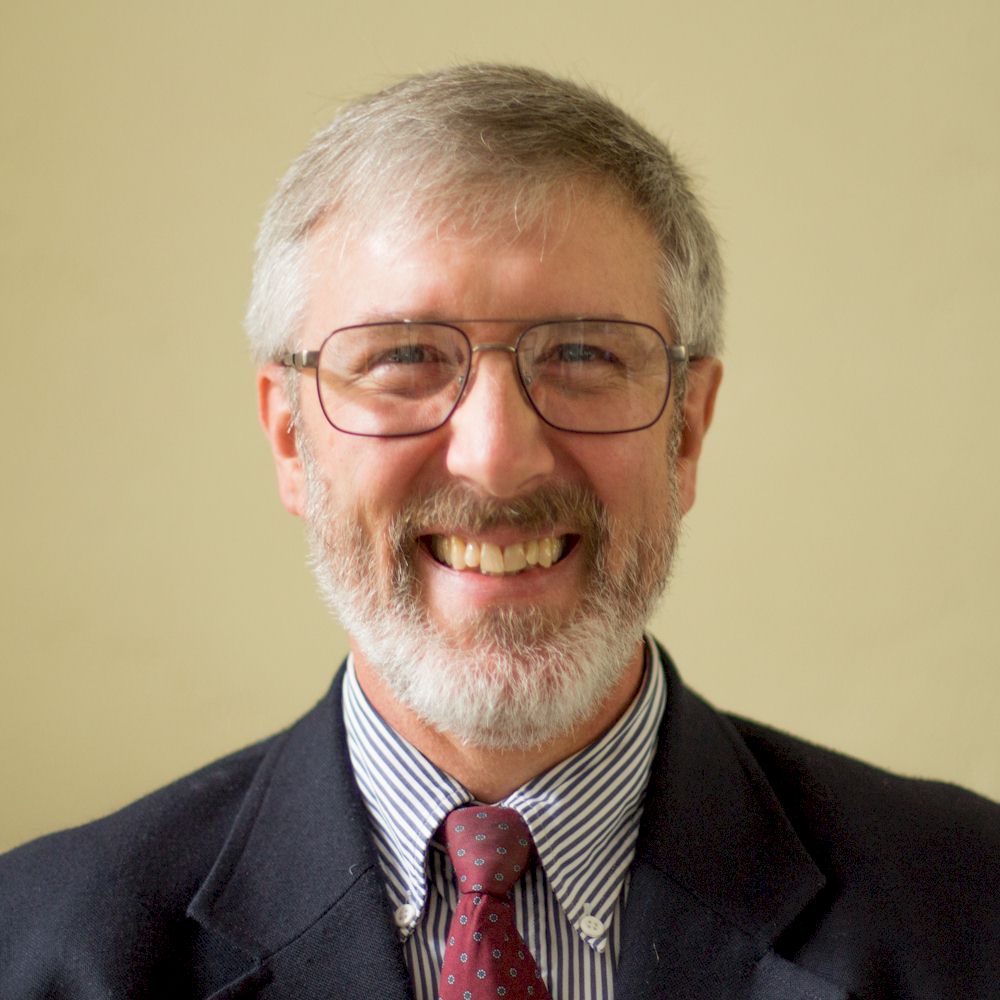
As a long-time board member and supporter of the mission and vision of Gutenberg College, I want to encourage other champions of the college to be aware of the importance and opportunities of estate planning, including the inevitability of estate taxes.
Any planning our family makes is based on the LORD’s generosity as our Provider. While we’re still a few years away from retirement, we have the ability and the desire to support Gutenberg College’s future in a very tangible way.
We know that one tangible way to both strengthen the college’s future and reduce the tax burden on our IRAs from the Required Minimum Distribution is to transfer a Qualified Charitable Distribution from the IRA directly to Gutenberg.
Being able to steward our resources and ultimately benefit directly from those gifts sent directly to Gutenberg seems to be a best-case “win-win” situation. We get to support the college, and we reduce our tax burden.
I encourage you to contact the college at office@gutenberg.edu to reach out for a conversation on how you can participate.
Donor Testimonials
A current Gutenberg supporter shared how she and her husband found a new way to give:
While talking with their financial advisor about their desire to support several charities, the advisor introduced them to Qualified Charitable Distribution (QCD).
“I was excited when our financial advisor mentioned this tool when learning we desire to donate to various charities.”
Because the supporter is over 70½, she was able to give directly from her IRA to the college—making an immediate impact without increasing the couple’s taxable income. Their gift is already at work supporting Gutenberg’s mission, and their experience highlights something many donors don’t realize: there are often practical, accessible ways to give that align both generosity and stewardship.
One longtime supporter of Gutenberg has built giving into the natural rhythm of her life:
Now long retired, she makes an annual gift of $6,000 to the college through a Qualified Charitable Distribution (QCD) from her IRA. Like many in her stage of life, she is required to take a minimum distribution each year—but she’s chosen to direct a portion of that toward something she deeply values. By giving in this way, she’s able to support Gutenberg’s work each year while stewarding her resources wisely.
But her generosity doesn’t stop there. In addition to her annual gifts, she has also included Gutenberg in her estate plans—ensuring that her support will continue well into the future.
If you’re exploring ways to give, a Qualified Charitable Distribution may be one option to consider. As always, we encourage you to consult your financial or tax advisor to determine what’s best for your situation.